
Building Durable Advantage in an Era of Abundant Intelligence
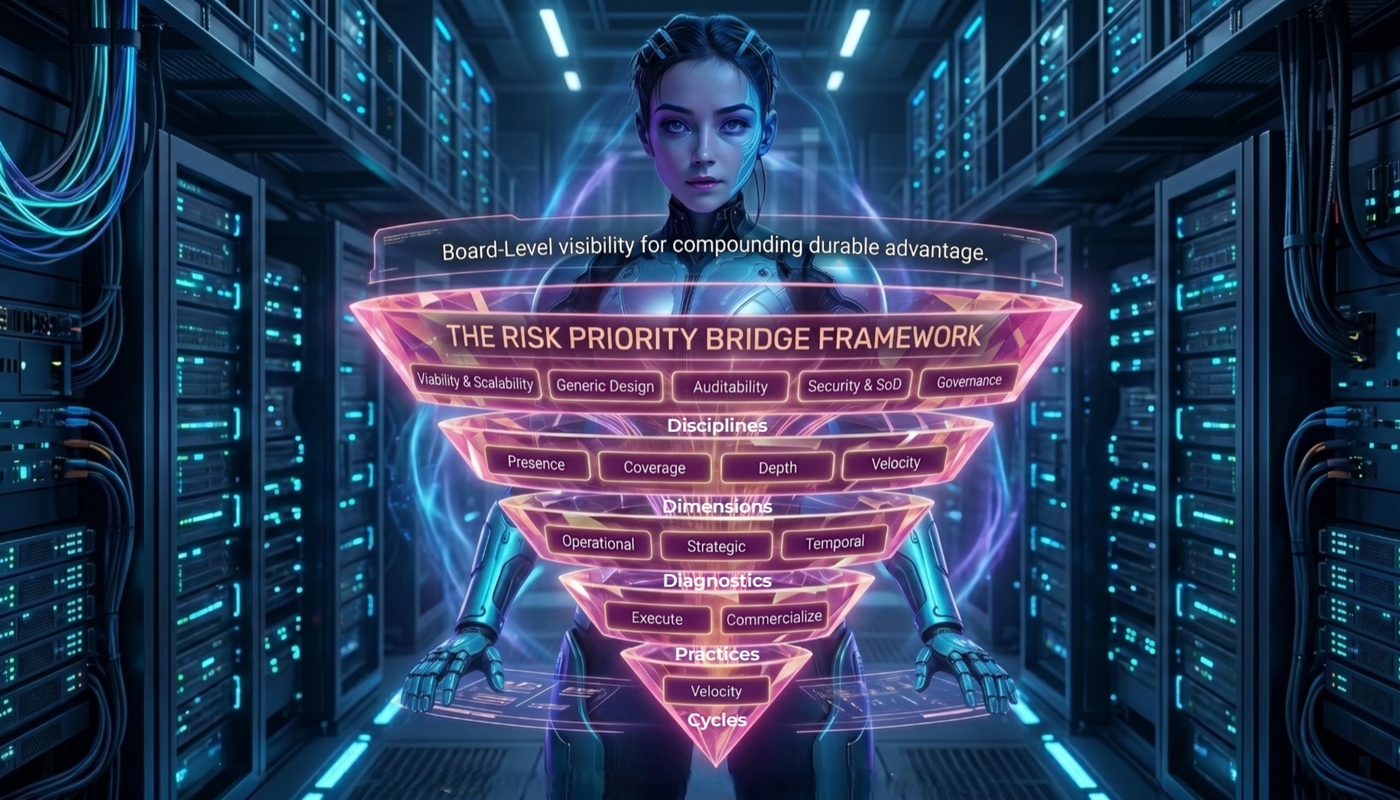
Abundance has changed the terms on which organizations compete. The cost of intelligence, of software, of talent, and of forming an organization at all has collapsed toward commodity levels, and the moats that once insulated incumbents for a generation now provide protection measured in quarters. What endures is durable compounding advantage, measured not by any static moat but by velocity, and produced by practicing the bridge disciplines across both technical and business risk.
This five-part series introduces the Risk Priority Bridge Framework, RPBF, ThreddSync's practitioner-defined articulation of those disciplines. Read the parts in order, or start with whichever question is most pressing.
What the Risk Priority Bridge Framework is
RPBF rests on a single observation: every organization is always on some bridge, crossing from the risk posture it has now to the one its next stage will demand. Strategy frameworks assume the crossing is survivable; risk frameworks assume a steady state. RPBF takes the crossing itself as the unit of analysis and names the five practiced disciplines that make it safe: viability and scalability planning, generic design and technical-debt management, auditability and observability, security and separation of duties, and governance by construction. The disciplines are practiced, not purchased; they compound over time, and they cannot be copied.
The core premise is that building durable advantage in the era of abundant intelligence is no longer about owning a moat. When intelligence, software, and the means to start a company are all cheap, moats decay faster than they compound. What lasts is the ability to keep moving, the velocity to cross each bridge cleanly, and that velocity is produced by the disciplines practiced across both the commercial and the technical sides of the organization. The transition to AI-native operations is the bridge that matters most right now, and the same five disciplines carry it.
The five parts
- Part 1. The Moats Are Melting: Why Durable Compounding Advantage Is the Only Advantage Left
- Part 2. Steady State Is an Illusion: The Bridge Is the Unit of Analysis
- Part 3. The Five Disciplines That Make the Crossing Safe
- Part 4. Which Bridge Are You On? Applying the Framework
- Part 5. Governance by Construction: Why Abundant Intelligence Makes the Framework Non-Negotiable